
When organizing an outdoor exhibition in Hong Kong, whether it is a brand roadshow, product launch, outdoor market, or large themed expo, organizers must plan the on-site power supply carefully according to venue conditions. This helps prevent partial lighting failures, insufficient sockets, or sudden circuit trips across the entire exhibition area, all of which can affect exhibitor operations and visitor experience.
This article breaks down outdoor exhibition power demand, outdoor exhibition electrical equipment, booth power configuration, and key safety details step by step, helping you develop a practical outdoor exhibition power supply method that reduces the risk of power outages.
Why Outdoor Exhibition Power Planning Is Different
Many organizers are already familiar with the power arrangements used in indoor exhibition halls, where they apply for a basic power allocation based on booth size, submit forms, and let the venue handle the wiring. Outdoor exhibitions are very different. There is no built-in exhibition hall distribution system, and organizers must also deal with weather, ground conditions, and temporary structures, which makes outdoor exhibition power planning more complex than indoor setups.
Compared with performances or music events, outdoor exhibition power supply has several clear characteristics:
- Power points are widely distributed, with dozens or even hundreds of booths, each with different needs.
- The power load is diverse, with lighting, audio-visual equipment, refrigerators, POS systems, and demonstration machines all operating at the same time.
- Operating hours are longer, with many outdoor exhibitions open for the whole day, and some exhibitors also requiring power during setup and dismantling periods.
- Stability requirements are higher, because exhibitors need to keep displaying products and interacting with customers, and any sudden power outage will directly affect exhibitor operations
Therefore, in addition to calculating the total site load, organizers must also break down the power demand of each exhibition zone and booth, then match it with the right power supply method and cable routing design.
How to Assess Outdoor Exhibition Power Demand
A proper outdoor exhibition power demand assessment should cover the whole venue, each exhibition zone, and every individual booth. This helps organizers calculate total load more accurately and select the most suitable power supply method.
1. Calculate Power Demand by Zone
Start by dividing the site into different areas, such as the main entrance, public walkways, branding zones, food and beverage zones, and exhibition booths. Each area may require different power levels depending on the equipment used.
Exhibitors should submit a booth power application form listing all electrical equipment, including wattage, voltage, current, and whether the equipment needs intermittent or continuous power. This makes it easier to estimate total power demand for the full exhibition site.
2. Identify Critical Equipment
Not every device has the same level of importance. Critical equipment may include POS systems, servers, network equipment, and security systems, while display equipment may include LED walls, interactive screens, and lighting features.
Basic equipment such as fans, small display lights, and general lighting should also be included in the calculation. Organizers should also consider whether equipment is used during setup, opening hours, extended operating hours, or overnight storage periods.
3. Add a Safety Margin
After collecting the initial figures, the next step is to check whether the estimate is realistic. A good rule is to base the calculation on the busiest operating period rather than average daily use. Extra allowance should also be reserved for air conditioning, ventilation, and large screens, along with a 20% to 30% safety margin for temporary equipment changes or site differences.
Common Outdoor Exhibition Power Supply Methods
The right outdoor exhibition power supply method depends on venue conditions, event scale, and budget. The following options are commonly used for outdoor exhibitions.
Utility Power Connection
If the exhibition is held near a shopping mall, convention center, or public facility, the venue may provide temporary exhibition electricity through a formal application process. After approval, the organizer can connect to site electricity for temporary use.
This method is reliable and avoids the need for a generator, but it has limitations. Capacity is controlled by the venue, operating hours may be restricted, and the fixed distribution box location may affect booth layout and cable routing.
Mobile Generator Rental
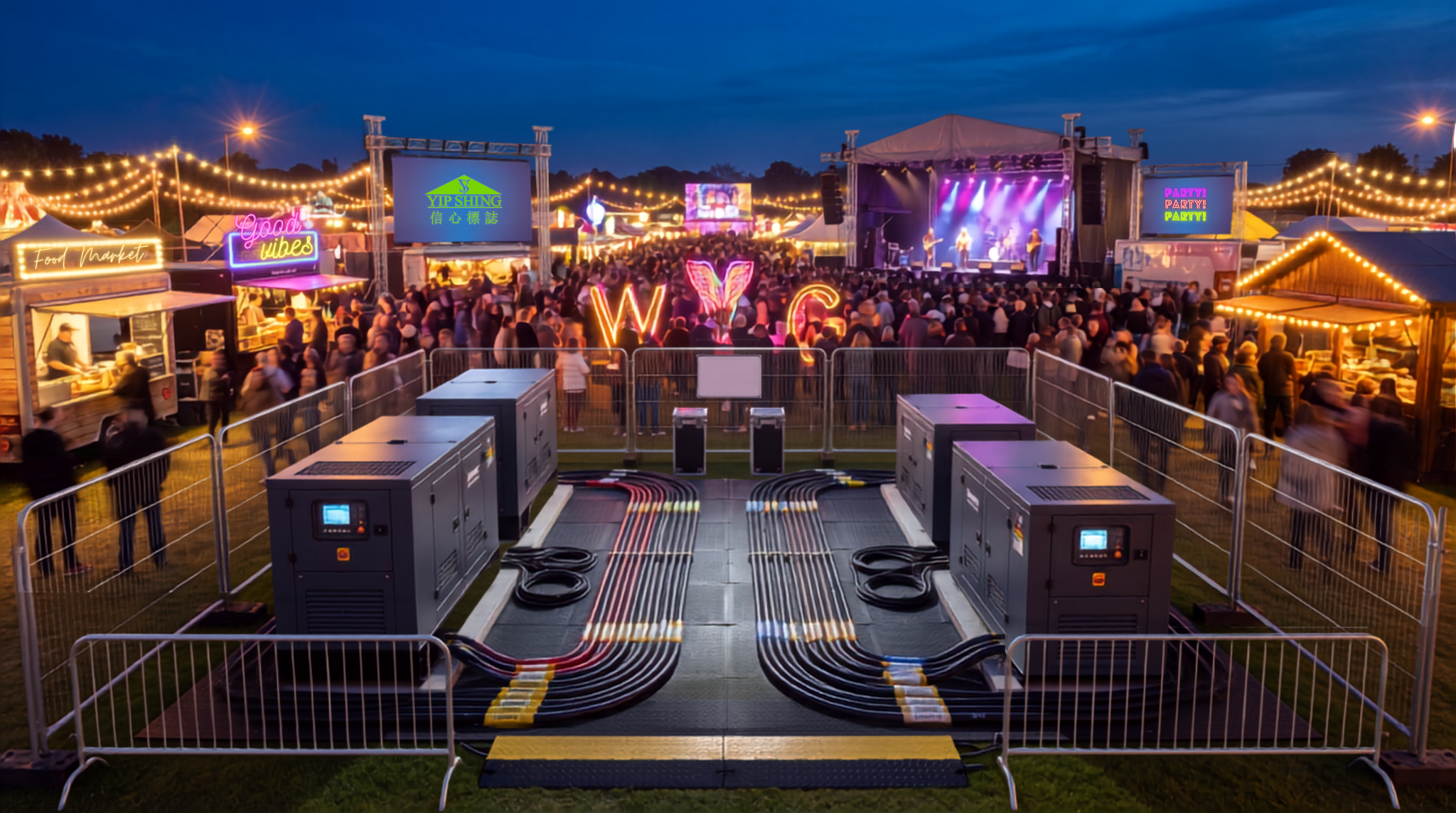
For outdoor exhibitions held in open spaces, waterfront areas, or country parks, generator rental is often the main power solution. Organizers can use one large generator or multiple smaller units depending on the exhibition layout and power demand.
Based on the Hong Kong Electrical and Mechanical Services Department (EMSD) Code of Practice for the Electricity (Wiring) Regulations, the following strategies are recommended when using generators as the outdoor exhibition power supply solution:
- Divide the entire site into several power zones, with each zone connected to a designated generator and distribution box.
- Assign high-sensitivity equipment, such as POS systems and network devices, to independent circuits with more stable loads, and apply suitable protection according to each device’s requirements.
- Reserve an independent power supply for the main entrance and key visual installations to ensure brand displays remain unaffected.
- For longer exhibition periods, plan fuel refuelling and routine inspection schedules in advance.
By working with a professional generator supplier, proper design, testing, and backup arrangements can improve the stability and maintainability of temporary power supply. It also makes it easier to expand or adjust the setup according to the needs of the exhibition.
Hybrid Power Supply
For some large-scale outdoor exhibitions or events with a strong focus on brand image, a single power source may not be enough. In such cases, a hybrid power supply solution is recommended:
- Use utility power for public lighting and basic booth power needs.
- Use generators to power high-load equipment such as large LED walls, interactive installations, or catering area appliances.
- Equip critical information systems with UPS units or battery energy storage systems to provide short-term backup power.
A hybrid power supply system reduces the strain on any single power source while improving overall power stability and redundancy. It is especially suitable for outdoor exhibitions with a large number of interactive display devices, such as technology experience shows, smart city themed exhibitions, and limited-time brand pavilions.
Outdoor Exhibition Electrical Equipment Setup
After selecting the outdoor exhibition power supply method, the next step is to plan how to distribute electricity safely and in an orderly way to each exhibition zone and booth. A well-designed outdoor exhibition electrical equipment setup can reduce the risk of tripping and equipment failure, while also improving booth presentation and visitor flow. Organizers should focus on three key areas: booth design, distribution box planning, and cable routing.
Booth Power and Lighting Setup
In an outdoor exhibition, each booth is essentially a small display space. Organizers should provide clear guidance in the power supply design to help exhibitors arrange their outdoor exhibition electrical equipment properly, such as:
- Socket quantity and placement: It is recommended to place sockets at the back or corners of the booth to reduce cable crossings on the floor.
- Lighting design: Energy-efficient LED lighting is recommended to lower power demand and reduce heat generation.
- Display equipment: Large screens and demonstration machines should have their power and voltage requirements declared in advance to avoid last-minute equipment changes on site.
Organizers can also include common equipment wattage references in the exhibition guide, reminding exhibitors to calculate their booth power demand in advance and apply early for additional power supply or upgraded power configurations.
Distribution Boxes and Circuit Planning
To keep outdoor exhibition power supply more organized, organizers can divide the site into separate distribution boxes by exhibition zone. Each zone should have its own independent circuit and overcurrent protection device, with power then distributed from the zone distribution box to each booth. This setup offers several advantages:
- If a single booth overloads and causes a circuit trip, the impact is limited to that specific circuit instead of causing a full-site blackout.
- Technicians can locate the problem booth or zone more quickly, reducing inspection and repair time.
- It helps organizers track actual power consumption by zone, providing useful data for future exhibition planning.
Electrical equipment should also be selected according to installation location and external conditions, with the proper protection rating and anti-electric shock measures. All equipment should comply with relevant electrical safety standards to handle rain and humidity in outdoor environments.
Outdoor Cable Routing and Safety Protection
When a venue has multiple rows of booths, supplying power to each booth’s outdoor exhibition electrical equipment usually requires extensive temporary cabling. During planning, organizers should pay close attention to the following points:
- Route cables behind booths or along tent structures whenever possible to avoid crossing visitor walkways.
- When cables must cross a walkway, use cable ramps, protective channels, or covers, and mark them clearly.
- Avoid leaving cable joints exposed on the ground or in areas where water may collect. All joints should use waterproof plugs and junction boxes.
- For routes that cross vehicle entrances or driveways, add stronger mechanical protection to prevent cables from being crushed or damaged.
These details are directly related to the safety and reliability of the power supply. Even a small oversight may lead to electric leakage, short circuits, or even personal injury, so the system should be designed and supervised by qualified registered electrical workers.
Reliable Power Support for Outdoor Exhibitions
Stable power is essential for a successful outdoor exhibition. From event layout and booth design to lighting and equipment setup, every part of the exhibition depends on a reliable power supply.
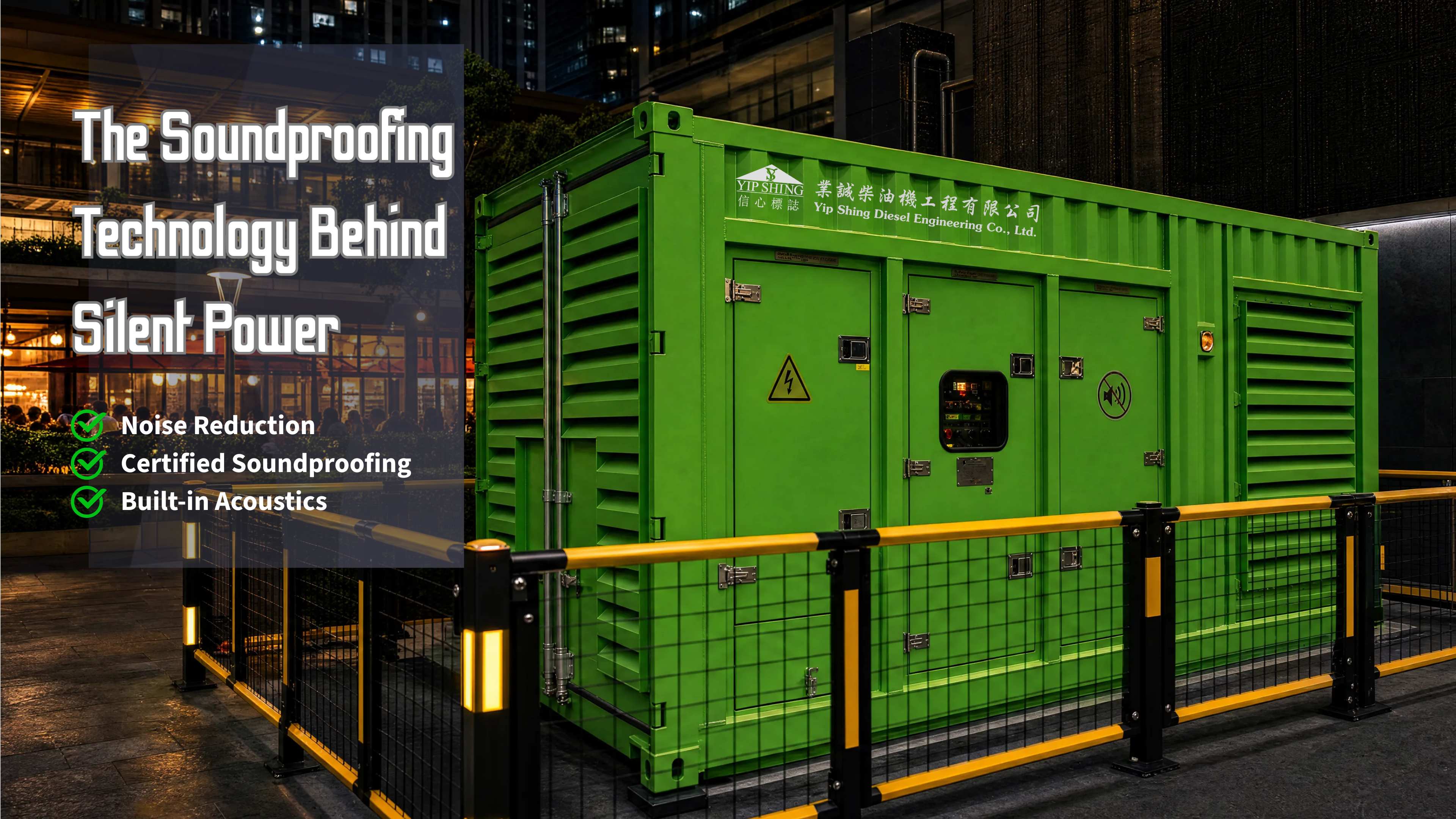
Top One Power provides mobile generator rental services and diesel generator solutions for exhibitions, infrastructure projects, and large events. Our generator sets are suitable for different outdoor exhibition power demand levels, and many are QPME certified to meet local environmental and noise standards.
If you are planning an outdoor exhibition and need help with outdoor exhibition power supply methods, electrical equipment, or power demand assessment, contact us for more details and a quotation.