

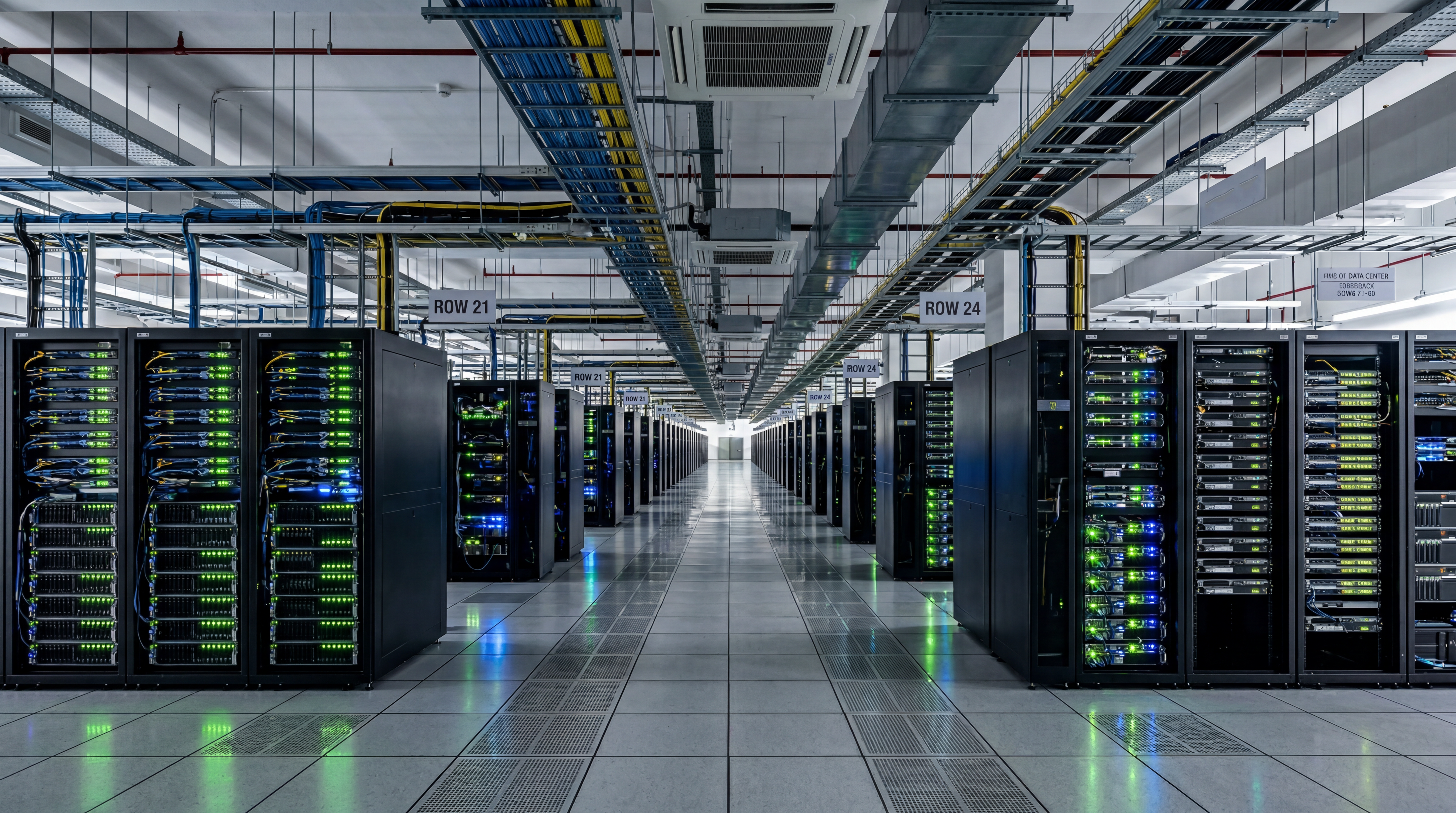
As businesses become more dependent on online services, any unexpected data center downtime can lead to serious financial loss and operational risk. This applies to cloud computing, AI model training, and e-commerce transactions alike. In this article, we look at the most common causes of downtime and practical ways to prevent data center downtime, helping businesses reduce risk and avoid costly disruptions.
Can Data Center Downtime Cost Up to USD 9,000 Per Minute?
According to market research from organizations such as Uptime Institute, the cost of downtime can approach USD 9,000 per minute, while 70% of downtime incidents result in total losses of more than USD 100,000, and 25% of incidents can reach losses of USD 1 million. These figures show how serious the impact of data center downtime can be for modern businesses.
Ripple Effects of Cloud Service Outages
Recent regional outages involving major cloud and infrastructure providers such as Cloudflare and AWS show how a few hours of service disruption can affect public transport information platforms, government websites, and online citizen services. These incidents demonstrate that downtime can quickly spread across education, transport, and public services, highlighting the importance of data centers and cloud services in keeping society running smoothly.
Risks from AI Growth and Power Grid Pressure
At the same time, AI workloads and high-performance computing are driving data center expansion, which places even greater pressure on local power grids. During peak periods, power load balancing becomes critical to maintaining system stability. In this high-load environment, any power dispatch failure or supply interruption that causes downtime can lead to direct costs such as refunds, penalties, and revenue loss, as well as indirect costs such as repair expenses, consulting fees, and potential stock volatility.
Hidden Indirect Costs
The problems caused by data center downtime are not limited to equipment repair or replacement costs. They also include business interruption, damaged customer experience, lost orders or transactions, regulatory and compliance risks, and reduced brand trust. For companies that rely on online services for daily operations, the true cost of downtime often lies in these harder-to-quantify but longer-lasting indirect losses.
Main Causes of Data Center Downtime
To reduce downtime risk effectively, management and IT teams need to understand the main causes and develop improvement plans. The following are common causes of data center downtime.
1. Power System Failure
Studies show that nearly half of data center downtime is related to power system issues. With the growing adoption of AI and high-performance computing, GPU server power consumption has increased significantly, with rack power density rising from around 5 to 10kW in the past to 20 to 30kW or even higher. If power distribution and protection systems are not upgraded accordingly, overloads and tripping become more likely, and servers may reboot or shut down if backup power cannot take over quickly enough during a voltage drop or brief power interruption.
2. Aging Electrical Equipment and Grid Fluctuations
Aging UPS batteries, lack of regular testing and maintenance, and failures in switching or distribution equipment can also cause downtime. When the grid itself experiences voltage drops, brief outages, or frequent fluctuations, and the backup or protection systems fail to operate properly, the result may be power transfer failure and damage or reboot of servers, storage systems, and network equipment.
3. Cooling System Failure and Overheating
As rack power density continues to increase, high-density servers generate a large amount of heat under heavy load. Traditional air-cooling methods are becoming less effective at keeping temperatures within a safe range, which is why liquid cooling solutions are increasingly being adopted to support high-power environments. If the cooling system is already operating near its limit, any additional fault or abnormal condition may cause the internal temperature to rise rapidly, forcing automatic protection systems to shut down servers to avoid hardware damage or safety risks. Even a short cooling interruption can accelerate equipment aging, shorten lifespan, and increase inspection, repair, and recovery time and cost.
4. Human Error
In addition to infrastructure issues, human error is also a major cause of data center downtime. This includes configuration mistakes, poor change management, and system updates introduced without sufficient testing, especially during routine maintenance, system changes, and network configuration adjustments. If there is no proper rollback mechanism in place, a small error can quickly turn into a widespread service outage.
5. Cybersecurity Threats
Cybersecurity threats such as ransomware attacks or distributed denial-of-service (DDoS) attacks can also directly or indirectly make services unavailable. To protect systems and sensitive data, security teams may need to shut down certain services or disconnect specific network links to reduce risk.
Data Center Downtime Prevention
Businesses can reduce the chance of unexpected downtime and shorten recovery time by improving power architecture, operational procedures, and intelligent monitoring.
1. Build a Redundant Backup Power Architecture
With an N+1 or 2N power design, even if one power unit fails, another can continue operating. For example, a system may combine utility power, UPS, and generators so that the UPS provides immediate temporary power when the grid fails, while the generator starts and takes over the load, keeping servers and cooling systems running continuously and reducing the risk of shutdown.
2. Introduce Smart Monitoring and Predictive Maintenance
More data centers are now using DCIM systems together with IoT sensors and data analytics or AI technologies to monitor voltage, temperature, humidity, UPS battery health, and equipment load in real time. Continuous monitoring and trend analysis allow early warning when small abnormalities appear, making it easier for engineering teams to inspect and maintain equipment before downtime occurs.
3. Improve Workflows and Emergency Training
In addition to hardware and system upgrades, businesses should establish clear standard operating procedures, change management guidelines, and dual-approval processes to reduce downtime caused by configuration and operational errors. Regular training, including outage simulations, backup transfer tests, and emergency response drills, can improve team performance under pressure and shorten fault resolution time.
Why Backup Power Should Be Planned Early
Backup power should not only be considered as a response to downtime, but also during the investment and design stage of a data center project. Data center construction usually takes two to three years, and temporary power is needed throughout the building, testing, and commissioning phases. During this stage, businesses can rent generators as a temporary solution to avoid delays caused by utility connection lead times or grid instability. After the data center is completed and in full operation, a permanent customized generator set can be installed as part of the core power system.
This approach gives businesses flexibility during construction and allows them to own a dedicated generator during operation. It also makes it easier to rent extra backup power during testing, maintenance, or peak load periods, reducing the risk of downtime.
Stable Power for Lower Risk
Top One Power provides generator sales and rental services in a range of power ratings, along with on-site assessment and maintenance support, helping customers maintain stable power during testing, engineering work, or temporary load increases. We also support data center projects at different stages by offering flexible rental solutions during construction as temporary or additional backup power, and by helping plan long-term owned generator systems to ensure continuous power stability.
Related posts:
 Backup generators for data centres!
 Reliable Power for Every Application: Top One Power Diesel Generators
 Outdoor Concert Power Supply Guide: Audio Power Methods, Electrical Equipment, and Safety Tips
 Complete Guide to Diesel Generator Maintenance: Understanding Service Items, Schedules, and Cost Budgeting